
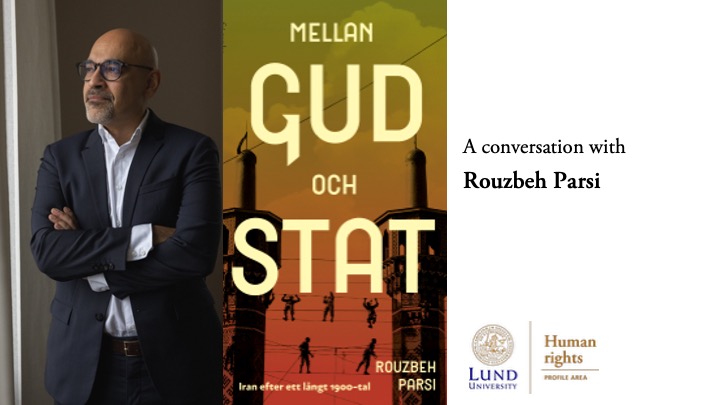
This is an edited and translated version of the epilogue to Rouzbeh Parsi’s book Mellan Gud och stat. Iran efter ett långt 1900-tal. (Book title in English: Between God and State. Iran After a Long 20th Century.) Fri Tanke, 2025.
Welcome to this event on 8 April 2026, where the book will be presented and discussed. More details can be found on the event page.
The question of what kind of society Iran should be has characterised the country’s 20th-century history and is common to all societies around the world that underwent radical modernisation during the last century. It is and remains an open question. The 1978-79 revolution set Iran on its current course, but it would be naive to conclude that the old society was thereby destroyed and replaced by entirely new dogmas, ideas and norms.
However, the political elite’s inability to renew itself is becoming increasingly fatal. In some respects, this inability is inherent in the Islamic Republic’s way of governing (or misgoverning), while in other respects it is linked to Supreme Leader Ali Khamenei’s personal inability to choose a course of action. In other words, the Republic’s decision-making capacity is severely lacking. There are parts of the elite that can both make a more accurate diagnosis of the system’s shortcomings and even propose alternative solutions, but so far they have been unable to assert themselves against those parts of the elite that want to preserve and safeguard the system in its current form.
The Islamic Republic has learned its lesson about how to retain the power of the monarchy it overthrew, but the revolutionary project is much more dependent on the participation of the population in order to be realised than the Shah’s vision for a modern Iran ever was. For the republic, it is partly a question of legitimacy and partly a question of the system’s self-image as having sprung from the people – for the people. The republic is far more participatory than the monarchy ever was, but it is also more violent than the monarchy ever dared to be. The republic’s inability to resolve the crucial issues facing Iranian society is its Achilles heel.
The result of this mismanagement is a steady erosion of the state’s legitimacy in the eyes of its citizens. The inability to combat corruption within its own ranks and to reach a truce with the United States that could open up trade to the global market is making the country even poorer and, more fatally, more unequal. The bloody suppression of protests in december 2025/january 2026 has militarised the conflict with society and theIslamic Republic, having lost most of its legitimacy, is now also losing its authority.
At this point in this jeremiad, someone will exclaim: ‘That is why the Islamic Republic will fall!’ It is not that simple. Conditions and systems that we may consider completely illegitimate, intolerable and “ought to” collapse often survive longer than anyone would want to contemplate. And if any change occurs at the systemic level, it will probably not happen in a dramatic way. It is unusual for systems to give up, as in East Germany, where an ageing leadership without popular support imploded and the people’s desire for freedom peacefully resulted in a democratic form of government. More common is what happened in Romania, for example, where popular protests only achieved results when the military abandoned the political leadership and thus sealed its fate. In other words, a shift in the balance of power within the state apparatus and the security services was required.
This does not mean that the people and the outside world are powerless in the face of the outcome of the drama. But as long as the opposition cannot win by force of arms, it must identify those parts of the political elite that are willing to negotiate and compromise with them. Such a transitional solution is based precisely on the realisation that the old elite possesses formidable capacity for violence, but lacks legitimacy. The opposition, for its part, lacks the former, but possesses the latter. If the opposition can unite, literally by mobilising people for demonstrations, and politically by agreeing on a list of demands and a vision for what should replace the existing regime, it can try to negotiate with those within the old regime who want change and are willing to work for it from within. This does not guarantee success, but it reduces the risk of bloodshed – at the cost of not bringing to justice, for the time being, all those who deserve to be tried for their abuses against their fellow citizens.
To achieve change in the present, we must also reflect on the past. Just as each individual benefits from knowing their past, their family and their family history in order to gain clarity about themselves, societies and states need a historiography that can provide a framework for understanding who they are and where they come from. In this way, the writing of history is an important element in the construction of the self, a self-image and a self-understanding. This image is almost always authentic to the person in question – without necessarily being true.
The state is not particularly interested in the scientifically humble attitude that better, i.e. more nuanced, explanations are likely to emerge the more we examine the past. This does not mean that these chronologies and explanations of historical events are by definition false or untruthful. But their overall purpose, the logic of the narrative, is to instil confidence in citizens about the nation and the community of destiny to which the individual belongs, voluntarily or not. What gives national narratives their strength are the slightly transcendental qualities and dimensions that are infused into more or less true historical events.
The coup d’état in Iran in 1953 and the revolution in 1978-1979 are key events that are interpreted very differently by different groups. On the one hand, there is a conflict about what really happened and, on the other, about what it led to. Was 1953 an anti-democratic victory that paved the way for the revolution, or was it a rescue from a possible communist future? Addressing these kinds of key points in the historiography that most people in a country relate to and rely on requires collective soul-searching. It requires a society that is prepared to confront difficult, painful and traumatic memories and events whose significance we do not agree on. This is what is known in German as Vergangenheitsbewältigung. The concept has its origins in the German need to process, examine and come to terms with the guilt and responsibility for the Second World War and the Holocaust. Taking responsibility for one’s history means, among other things, seeing it in its entirety, not just the edifying and successful parts. This is not necessarily something one undertakes voluntarily or lightly, but in the long run it is important in order to be able to create social peace. Such a more representative, collective historiography is also necessary for the creation of a more democratic society. In the German case, this insight did not come out of the blue. It was both imposed by the Allies and an inevitable self-examination in order to build a new Germany.
As in Germany after 1945, there is a societal trauma in Iran after 1953 and 1979. The causes and consequences of the coup d’état and the Iranian revolution need to be discussed in a more sophisticated way. Like all important historical events, they are subject to many different interpretations and are read by individuals and groups with different reasons and purposes. It is not surprising that this set of interpretations also changes over time. The purpose of a more transparent conversation about the revolution and its legacy is not for everyone involved to agree. The goal is more modest: that they learn to engage with and deal with their shared history in a more knowledge-based and constructive way – that they talk to each other instead of threatening and excluding each other.
The problem, then, is not the diversity of narratives and historiographies. From a democratic perspective, the problem is rather fact-resistant and ideological narratives in which those who advocate one interpretation or another of Iran’s history refuse to even participate in conversations where different perspectives can be debated and discussed. Precisely because many of these histories are rooted in trauma, there is a clear need for Iranian Vergangenheitsbewältigung. Many of those who opposed the revolution or lost the struggle for it would first need to examine their own histories in order to then be able to address all the blind spots in the official history advocated by the Islamic Republic. What makes Iranian politics so explosive for the diaspora is precisely the lack of dialogue about historical experiences and what they mean for the country and its people today. Is this just a hobbyhorse that I insist on because I am a historian? No. If we cannot agree on, or even discuss, what happened in recent history, it is difficult to see how Iranians in Iran and in the diaspora will be able to tackle the much bigger question in a rational and democratic way: the future.
R.P
Berlin, August 2025 – abridged and slightly updated February 2026
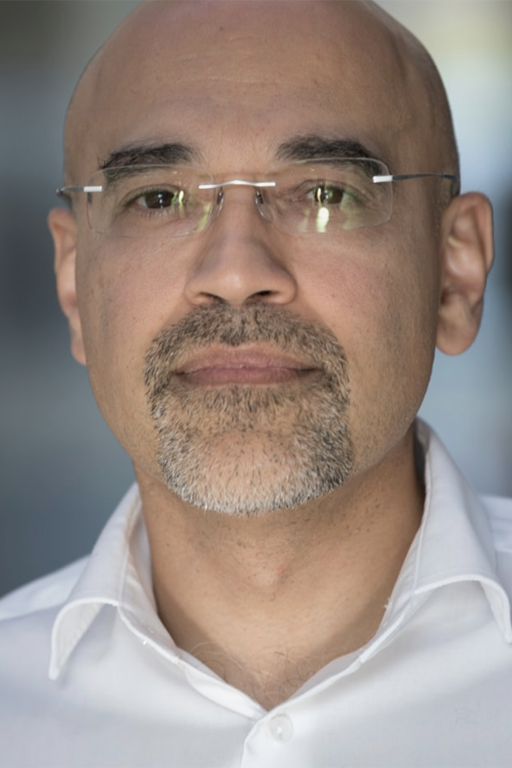
Rouzbeh Parsi is a historian and foreign policy analyst with a PhD on modernity, nationalism, and gender in interwar Iran. He has helped establish the Human Rights programme at Lund University and is currently a visiting lecturer at the Division of Human Rights. Rouzbeh has held senior roles in foreign policy analysis at the EU Institute for Security Studies and the Swedish Institute of International Affairs.
